Wednesday, 1 January 2014

When is a pixie not a pixie?

This post is about the Disney film Frozen. YOU MUST SEE THIS FILM. You must see it. This post will assume you have seen it, so DO NOT READ until you’ve seen it. Go! See! Now!

Ah, what can I say about Frozen? Its virtues are as uncountable as the stars. It’s got all the good points you’d expect from a modern animated feature - breathtaking visual splendour, supreme attention to detail, perfect timing - as well as the best of this genre’s screenwriting talents: good pacing, a compelling narrative, spot-on dialogue (including great comedy), rounded characters with personal journeys that play off each other. Also, and this is no small matter, it has an awesome and actually quite novel use of superpowers. Oh yeah, and the music is joyous beyond all reason.

And there's a frost giant! What more could you want?

But most of all, the reason why I wholeheartedly embrace the Frozen cult, why the whole thing makes my heart thrum with delight, is its treatment of women.

But how can you say this, I hear you cry, when the film is set in a fairytale medieval kingdom with useless princesses, where men have most of the positions of power, and the characters are all more or less gender normative?!

Hear me out while I explain why I think Frozen is the most gender-revolutionary film to have ever come out of Hollywood, or the most revolutionary film with a talking snowman at least. Yes, Frozen doesn’t do much to challenge gender stereotypes. Rather, what makes it special, I will argue, is that it completely overturns how such stereotypes are capable of being used as actors in a mainstream motion picture.

The Sexy Villainess

I have heard it said that one of the potentially troubling ways in which Frozen conforms to conventional gender narratives is that when Elsa first unleashes her ice powers, she simultaneously transforms her appearance, suddenly taking down her hair, developing new curves and acquiring a suggestive new cut for her dress.

This plays to an old and ugly trope of women only ever being openly sexy, or embracing their sexuality in any way, when they are also evil. This trope in turn plays to the even older and uglier archetypal dichotomy of the Madonna and the whore. So much of Western fiction, including Hollywood, has deployed this horrible vision of all women as either chaste and virtuous, or depraved and sexual.

But Elsa utterly and exuberantly overturns all this in the course of her magnificent solo “Let It Go”. The song is clear beyond the slightest doubt: she is not turning evil. Rather, she is embracing her own power, and staking a claim for her own freedom. It’s a song about about doing as one choses, free from the demands of a judgemental society. Elsa’s unleashing of her powers is a metaphor for becoming a fully-fledged actor, in the true sense of the word. This is a theme throughout the film and it’s at the crux of why I find it all so exciting and revolutionary.

Yes, the new dress reveals a shapely leg, but this is the same leg that with a single stomp is capable of raising up an entire castle. Her ice powers are linked to her sexiness not because they are both bad things, but because they are both glorious and awesome to behold. And because they are both things that she is now free to enjoy fully as a responsible adult, an actor in control of her own body and her own actions - all on the very day that she has come of age.

I first saw Frozen with my ten-year-old sister. She absolutely loved it, and the bit she liked most was “Let It Go”. All through Christmas, she’s been strutting around the house doing the sexy-empowered walk and miming Elsa’s ice powers. I couldn’t be more thrilled. My older sisters never got such awesome role models. 
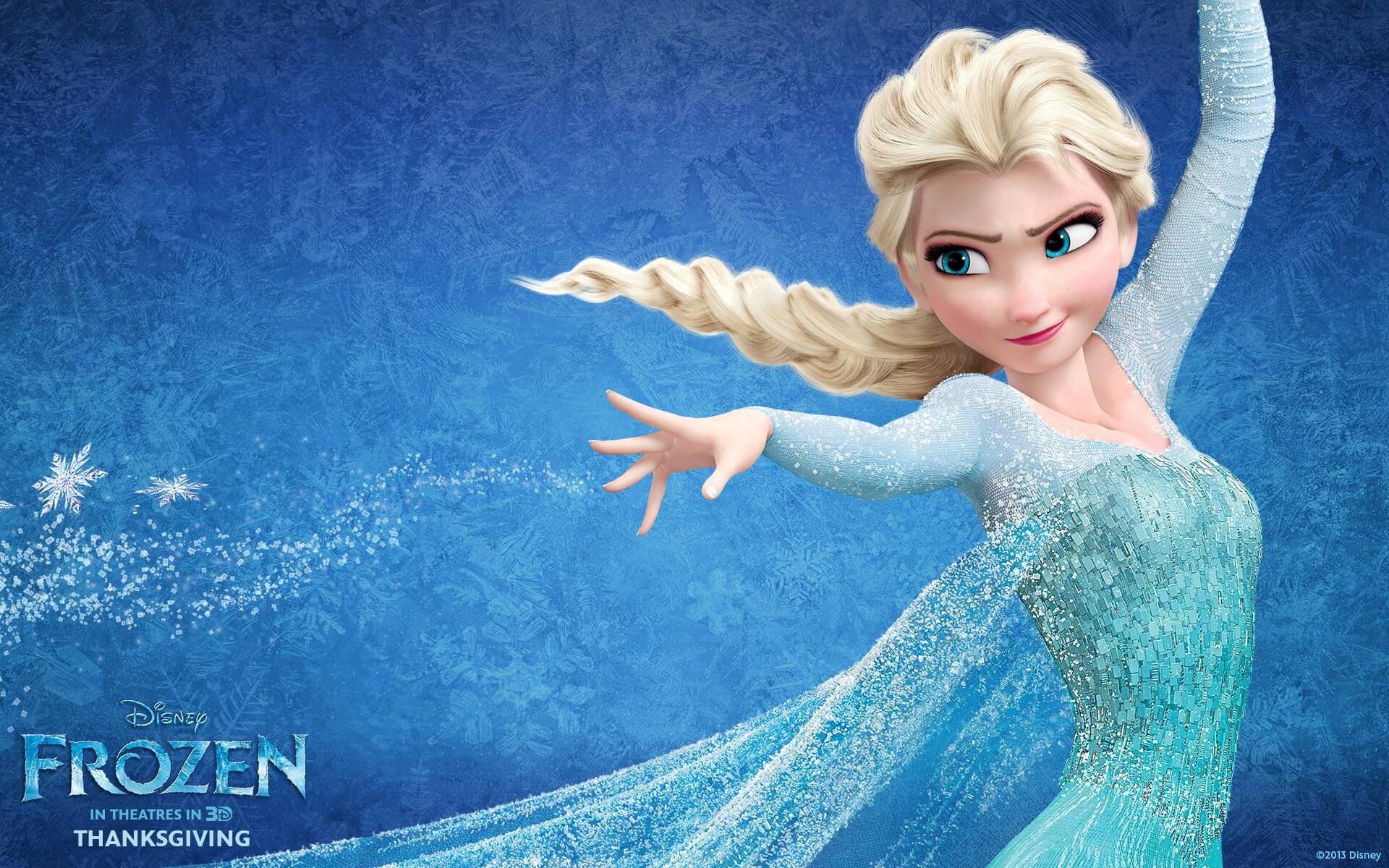
My sister should aspire to nothing less than magical superpowers.


The Love Thing

For all her sexuality, Elsa doesn’t get a love story. This is another clear statement that embracing sexiness doesn’t mean you have to find a guy if you don’t want.

Instead, it is the other sister-protagonist, down-to-earth Anna, who gets the romantic subplot. This is another complaint I’ve heard made against the gender roles in Frozen. At the start of the film, Princess Anna, alone in the big empty castle, dreams of finding a man to love. How predictable.

But again, Frozen’s treatment of romance is a lot more nuanced than you might expect. First of all, the song in which Anna mentions she wouldn’t mind finding a boyfriend is the “First Time in Forever”. The first part of the song has Anna singing about how she can’t wait to meet other people for a change:

Don't know if I'm elated or gassy
But I'm somewhere in that zone
Cause for the first time in forever
I won't be alone

Then she has a brief bit about how as well as meeting new people, she might meet “the one”. Then the song switches to Elsa, who sings about how she has to stay strong and “don’t let them in”:

Conceal, don't feel, put on a show
Make one wrong move and everyone will know

Then they duet, with the same lines:

It's only for today
It's agony to wait

Where Anna is looking forward to it, and Elsa is dreading it. In short, the song is fairly straightforward character development, highlighting the very different kinds of people the two sisters have become. Anna’s thoughts about “the one” should be taken in this context - she’s open to meeting people and sharing her life with them, while her sister is not.

When the guests arrive, of course, she does meet Prince Hans and enjoys a whirlwind romance. But this is again a set-up - transparently so, as the rest of the film’s events unfold. The love scene, where Anna and Hans have so much in common and are supposedly made for each other, is clearly a parody. With its “Can I say something crazy”s and its “Jinx”s, it’s openly making fun of how silly this popular notion of easy, unrealistic love is, just as much as XKCD #807.

Later, when Hans is revealed as the villain and the extent of how facile their love really was becomes clear to Anna, there’s an incredibly poignant moment where she sits miserably quivering with cold by the fire and says “I don’t even know what love is”. But the film does in fact have a whole song about what love is - the very intelligent yet comic “Fixer Upper”. Among the lyrics of this fun number is the elegant insight:

We’re not sayin' you can change him,
‘Cause people don’t really change.
We’re only saying that love's a force
That's powerful and strange.
...True love brings out their best!
...We need each other to raise
Us up and round us out.
Everyone’s a bit of a fixer-upper...

These thoughts underly the all the changing relationships between the various characters in Frozen. The result is that the film presents a thoughtful, uplifting and kind vision of what genuine love is. Again, it entirely overturns the tropes we’re so used to seeing in these kinds of stories. And the message we’re left with is delightfully progressive: there’s nothing wrong with being a little bit romantic, but you should try to come to a fuller understanding of the complexities of love and of human interaction in general.

Manics Are People Too

Another complaint I’ve heard, and something which originally bothered me but which I have learned to embrace, is that Anna exhibits a lot of the features of a certain kind of romantic heroine - at least at the start of the film. She thinks of herself as dorky. She’s carefree and clumsy. She doesn’t know how beautiful she really is. She talks a lot about how she likes chocolate. She’s girly but has a tomboyish side. She’s whimsical, excitable, has big dreams, is in love with life and moves around everywhere really fast.

There’s no two ways of saying it: Anna is a manic pixie.

In the standard post-Whedon model of thinking about gender in mainstream movies, manic pixies are the Enemy. The are the antithesis of the Strong Female Character. We hates them, we does, my precious.

Who are you calling manic?

But a lot of pixie anger is misplaced. People often - understandably - get annoyed by their sheer annoyingness. No one likes a good looking person who pretends not to be good looking. And we instinctively distrust those who seem to be too perfect. And with good reason - manics have often been used by boring screenwriters as the dream girl for their male protagonist, basically just an object to be admired, with no real agency. They aren’t afforded basic character rights such as development over time (other than to reveal a tragic side which they already had). And they certainly don’t make any decisions or take any actions which meaningfully impact the course of the story.

But what if a manic pixie wasn’t written in such a lazy fashion? Despite all the aggravating outward appearances, Anna is not abandoned in the traditional manic pixie fashion. Indeed, she becomes the central protagonist of the film. Never does she rely on men to move the story forward for her. At every stage, she makes her own choices. It’s her story, she owns it, and at the end of the day it’s not at all difficult for even the most hardened pixie-hater to get behind her. Plus, she talks to Joan of Arc, so...kudos.

There are only two female characters in the film, but they get all the action. Everything hinges on them, their choices, and importantly, on their relationship. In this respect, Frozen brings to full fruition a trend that’s been slowly growing in Disney films over the last seven decades. Disney started with princesses with no agency whatsoever. Snow White has things done to her, never doing anything herself. The true love has to come and kiss her prostrate body to allow her to even live.

Later, in the 90s revival, princesses got a slightly greater share of the action. At the end of Beauty and the Beast, my personal favourite, it’s Belle’s love that saves the prostrate Beast. But Belle spends most of the final act locked up or weeping uselessly, and many of the film’s key decisions are not made by her. Later still, the likes of Pocahontas and Mulan brought the strong female character to Disney. But these films still depend on plots largely dictated by men, with the romantic element remaining central. 2010’s Tangled takes another step on the path, with the strong, pixie-esque Rapunzel taking the initiative to embark on her own journey of self-realisation. But after the realisation is achieved (the lantern scene), there’s a whole other weird section of the film where she gets kidnapped twice, is locked up at the first sign of defiance, tries to help but is stopped by a man who cuts her hair - her defining feature and a symbol of her sense of self - without asking her. The ending undermines her agency. And the only other female character in the film is a sexy villainess. So...yeah I was disappointed by Tangled because in many respects it has all the makings of a stellar film.

Frozen transcends all this and completes the journey properly this time, with female characters who are true actors. This is nowhere more apparent than the spectacular climax itself. Anna, on the point of death, is waiting for true love’s kiss to save her (although even at this stage she’s still trying her best to get to him on her own steam). Elsa is on her knees weeping into her hands, with another man approaching her to put her to death. The tropes are set up on their pedestals - the powerful sexy sorceress always has to die, the manic pixie needs a man’s love to happen to her.

At this point the sledgehammer comes down and smashes both tropes to smithereens in the most satisfying fashion. Anna leaves Kristoff in the dust and goes to Elsa’s rescue herself. She blasts Hans away, and is left frozen in a moment of pure action. Her own act of love and self-sacrifice saves them both.

The most obvious inversion here for audiences, I expect, is that a man’s love for a woman (true love’s kiss) has been turned around to become the sisterly love of two woman - a powerful epiphany in the character arcs of both women. But the greater inversion for me is that of action - instead of the lover saving the cursed victim, the cursed victim saves herself on her own.

Just What the Doctor Ordered

A few months ago, I wrote about a great article in the New Statesmen that powerfully demonstrates how ostensibly strong female characters are not good enough. One of its best points is that when men want to be strong, they can do so in many varied, interesting, complex different ways. When women are strong it typically just means they know kung-fu and are angry a lot of the time.

Frozen has shown Hollywood how female protagonists can be done right. Anna and Elsa are not Mulan with her sword, or Merida from Brave with her bow. They don’t know any martial arts. They don’t talk mean. They don’t take on traditionally male roles. Yet they are perhaps the strongest female characters Disney has ever created. And everyone loves them for it - remember, Frozen is Disney’s best performing feature since The Lion King. If we needed any confirmation that women can be gender normative and still marvellously strong, this is it. In fact their normativeness arguably makes their strength all the more thrilling.
It's not exactly ice powers though, is it?

But most of all, they’re complex. They’re more deeply and interestingly developed than many many male protagonists in Hollywood, and certainly much more so than the other male characters in the film. I particularly like Elsa’s story in this regard. She starts the film already troubled and multi-faceted. A sense of daughterly duty and respect for her parents clearly motivates her to stay disciplined and keep to the conceal-don’t-feel regime, despite how much she desperately misses Anna’s company. The coronation sequence is a masterclass in portraying the build up of these competing motivations, until they explode in a wall of ice-shards. Her self-banishment leads to the first major development in her story - the “Let It Go” song - where she finally lets all her pent up anxiety out, frees herself from her lifelong prison and embraces her empowered inner self.

This alone is more than most female characters can hope to achieve, but for Elsa it’s just the beginning. The “Let It Go” epiphany is only the first stage in her journey. The song, for all its glory, is also an acceptance of isolation. The ice castle makes it very clear that despite her empowerment, Elsa has merely imprisoned herself in a different form. And, rejecting those who try to help her, she soon winds up in a literal prison. It is here, and on the ice-sheet blizzard, that she realises the futility of such a shallow form of empowerment, and it is Anna’s love that teaches her a much more genuine form of self-realisation, one that embraces others. When Elsa says “of course! Love!” and then turns winter back into summer, it is ostensibly the height of Disnified cliche silliness, but audiences don’t react to it that way. Rather, for the audience, it feels natural, cathartic and uplifting - and this is entirely because it represents the final stage of Elsa’s difficult and complex character journey, where she finally heals the fractures inside her, completely masters her powers, and becomes a better person. She has thawed her frozen heart - and then you realise this was the theme from the very beginning, starting with the tone-setting opening song, “Frozen Heart”.

For a Disney princess to receive such treatment is nothing short of a revolution.

Monday, 9 December 2013

I am no man

Scattered minor spoilers.

At the end of the summer, I posted a piece arguing how terrible the movie industry was at doing good female characters. I listed all the films I'd seen over the summer which exhibited this terribleness; they were legion.

But summer's end is inevitable, and the movie industry ebbs and flows in the opposite direction to the seasons - after summer comes a rebirth and vitality that renews one's hope for the future. Looking back at the films I've seen recently, I am struck by how awesome they are at female characters. And not just female characters but female-centric story lines, with real women acting as actual people who make choices and stuff! Revolutionary! For me, the story is always paramount, and often the least well dealt with in terms of gender. This autumn has made great headway in reversing that trend.

Just recently we've had two French films about young women exploring who they are via their sexuality: Jeune et Jolie, and Blue is the Warmest Colour. Both of them are slow, boring and pretentious; the first failed to bring it's main character to life at all, and the second, while extremely powerful in parts, ended on a bleak note where the main character failed to resolve any of the issues or problems she was dealing with.

A friend who I saw it with said that he liked this - real life doesn't always resolve nicely and it's more effective to show us the brutal truth than some neatly wrapped-up plot line. Personally, I find this poor story-telling - catharsis is a key element for me, although maybe the director, Kechiche, intended the film more as a parable than a story. Not my cup of tea, at any rate.


Another film noteable for its directorial finesse and masterful techniquery but ultimate ineffectiveness of story was The Counselor. I never really felt I knew who any of the characters were. Just like Prometheus, each scene seemed to be an island of breathtaking self-contained drama, without ever joining up any of the dots. While Cameron Diaz was probably the worst actor of the five, her character was probably the most exciting - a dazzling femme fatale who revelled in her exquisite ability to manipulate and control everything around her. 


Then there were my favourite films of the post-summer season. Short Term 12, a story of young people with issues who care for even younger people with issues, was rightly called a masterpiece: the story is dizzyingly multi-levelled yet achingly simple and direct. I love the way it transcends gender to get right to the core of exactly who each of the characters are as people and why they make the choices they do.


Katniss Everdeen continued her coming of age in part two of the Hunger Games: Catching Fire. Where the story in the first film was predictable and unimaginative, and frankly very slow, the second film was completely engaging. The key lies in making other characters just as interesting as the heroine if not more so: when Peeta has a personality that we care about, it means he can have relationships with Katniss and others that we can also care about. I particularly liked that they took time to develop the character of the strange PR girl who manages the district 12 team. That kind of thing adds a new dimension that really brings the story to life, and allows us to relate to the main issues faced by all the characters a lot more potently.


In a less mainstreamy kind of way, How I Live Now did a similar thing. The protagonist, Daisy, has to deal with the apocalypse and in doing so, face down her own demons - a tried and tested forumla that is just wonderful when done right. By the end of the film, Daisy has survived the apocalypse and has become a well-adjusted and less insecure woman. The film was only let down by a tepid and empty love interest, but this was made up for by the other supporting characters.


I adored Gravity - not because of the epic visuals, but because of how they feed into the epic story. It's hard to tell a story with just one real character for most of the film, but they completely achieved it, simply by going back to basics. It's a very paired-down three-act deal, in which a woman struggles - yes, again - to survive against the odds and in doing so comes to terms with personal issues. The magic of this formula becomes apparent at the key moment at the end of act 2 when she halucinates the guiding hand of George Clooney's character, pep talks herself into turning the oxygen back on, decides to stand and fight for her own life, and blasts off to meet her future, as the music swells. Now THAT was masterful.


But perhaps my favourite story of all could be found in Carrie. Goodness knows why they chose to remake this work of staggering genius, especially as the new film sticks to the original to the extent that almost every scene is identical. The new version did cut some bits, however, in a worthy effort to deal with the slow pacing of the original; while this did lead to a better structured and more streamlined film, it also sacrificed, if only slightly, some of the longer character-building sections in the middle, which is a shame because I felt you didn't get as full a sense of who Carrie is pre-prom. The prom scene itself was, needless to say, nowhere near as masterful as the original, but it's always going to be a great scene however its done.

I have few words to express how much I love the Carrie story. Again, its success completely rests on the supporting characters - the repressive mother, the hateful Chris, the guilt-wracked Sue and the other caring kids and teachers at the school. It is these latter who nurture Carrie along her journey, who take her from the timid and adoreable creature, so full of kindness, and help her make the transistion to womanhood. The mother is the chief obstacle, and in overpowering her, Carrie makes the all-important choice to be a full person with all the agency this entails. Yet it is only really the first step on this journey out of repression, and before she can take another, she has all her worst fears about the world confirmed at her exact moment of triumph. At every stage is the aweful presence of blood - the showers, the cupboard, the prom dress (which the mother calls "red"), the bucket and the cruxifiction. The new film intorduced one more bloody episode right at the beginning: the birth.

What's great about this story is that, despite being really quite a simple coming of age tale, it still reaches staggering highs and lows - Carrie starts completely humiliated and alone, works her way up to the ecstasy of love that is prom queen, and is immediately returned to the humiliated loneliness, the lowest of the low, reducing her from serene joy to abject frenzy. Just as the blood on the mother's nightdress at her death mirrors that at Carrie's birth, so the blood on Carrie's hands at the ball mirrors that in the showers at the start.

But in another sense, Carrie's greatest triumph is still to come - after the conventional coming of age transformation is destroyed by the pig's blood, the true realisation of Carrie's darker self, and mastery of her real powers can take place. After all, when she puts her mother away the first time, she escapes. When she deals with her the second time, it's a finality. Carrie has completed her second journey - the one neither she nor the audience was looking for - at the exact moment when she fails to complete her first. She can now burn happily in hell, her story utterly resolved, her character fulfilled at a more fundamental level than she even knew to look for.

So those were the films I've seen recently with fully-fledged female characters. I've seen some other good films too - Captain Phillips was brilliant despite not featuring a single female face after the first couple of minutes. I also very much enjoyed Thor 2, which did much better with its supporting cast this time around, although it still didn't properly invest any of the female characters with their own stories or agency. Sigh, Marvel.

The point as ever is not that you need strong women to have a good film, but merely that its equally possible to do so. This is something the movie industry is slowly waking up to, if this autumn is any indication. Hurrah!

***
Update: Just before I published this, I happened to see Disney's Christmas film, Frozen. It is superb, and has a fantastic handling of strong female characters. I feel it should be the subject of its own post, but suffice it to say: see this film!

Monday, 23 September 2013

Two reasons why that Gen Y article is stupid

A response to that Huffington Post article about Gen Y that’s going around - read it first or this won’t make sense.

One

Describing the emotional state of an entire generation, defined as the decade and a half between the late 70s and early 90s, is entirely futile. Talk about generalisations. The author is literally saying that millions upon millions of people (even if we assume he/she’s only talking about the “West” or even just America, which he/she doesn’t specify at all), who range in age from – say – 20 to 35, and who cross every conceivable demographic, all have a common experience of frustration, disappointment, excessive ambition, self-delusion and manipulation at the hands of technology and society.

Everyone knows generalisations are bad. But why? What’s wrong with just assuming that obviously the author is talking about just “protagonists and special yuppies” (WHAT DOES THIS MEAN?!?!?!), so we don’t need to worry about pesky ethnic minorities, poor people, people who don’t live in cities and who dropped out of school, or even just those who have alternative lifestyles and upbringings? If we assume this, then surely the author is still making an interesting and valid point?

Not necessarily. Generalisations aren’t arbitrarily bad, they’re bad because they mislead and they marginalise. You can’t just take a massive group of individuals out of any context of time or place, and expect to come up with anything meaningful. Even if we allow all the lazy assumptions listed above, the so-called GYPSYs are extremely flawed as a concept. It’s not being pedantic to ask what exactly is a protagonist – or a special yuppie for that matter. They sound like middle-class urban white people, but how can we be sure? It’s important to know, because for the author’s argument to be of any use, we have to know the context in which it works. For example, did the GYPSYs feel the same way about their satisfaction in life in 2007 as they did in 2011? What about the ones who got started with their careers before the financial crisis as opposed to those who were still at uni or school? What about the GYPSYs whose parents were able to give them lucky breaks in good jobs starting age 22, as opposed to ones who began working at their local cafe when they were 16? I’d imagine these kinds of differences within the vast GYPSY mishmash are more interesting than anything that you could possibly say about the huge horrible group as whole.

One longitudinal study at the University of Michigan found that Gen Y was (loosely) much more concerned with money and much less with things like philosophy of life and improving the world, when compared to both Gen X and the baby boomers.[i] Surely this is the reverse of what we’d think from the delusional, be-yourself attitudes described by the HuffPo author. In the research of another sociologist, GYPSYs turn out to be optimistic, engaged and team players – all qualities that correlate strongly with happiness.[ii] More counterevidence can be found here. My point is not to disprove the argument with research, but merely to point out that if you write a piece that’s basically one massive generalisation with no statistical evidence, you have no ground to stand on when someone goes to the numbers and finds a different story.

Two

Gen Y is not unhappy. On the contrary, I would argue that it’s the happiest generation that’s ever lived, with the possible exception of whatever we’re calling the generation that’s coming after (Z?). Gen Y is not self-deceived, envious of each other or frustrated, and most of all it is certainly not unrealistically ambitious. The very idea is laughable.

Of course, when I say these things, I’m engaging in exactly the generalisations I just moaned about. In what follows, I’m not actually trying to prove these points as facts, but rather show a different side to the story that further underlines how flimsy the original argument was and how foolish it is to generalise at all.

I’m merely speaking from experience, being as classic an example of a GYPSY as they come. Among my white, middle-class, extremely well-educated and privileged friendship group, there are many emotional problems. I would say cynicism and despair at the state of the world are fairly prevalent, but only in a fairly abstract kind of way. More of an issue is insecurity, both in terms of one’s material situation and also feelings/sense of self. Everyone is constantly worried about their future, where they’re going in life, about the fragility of their social world, the ever-present possibility of failure and so forth.

What they are not, is surprised. They are not in the least disappointed or frustrated that they aren’t doing fabulously well – disappointment would imply a prior expectation of doing well that simply doesn’t exist. When I was at uni, we spent practically all our free time talking about how screwed we were going to be when we left. Everyone knew the job market was horrifying - it was a constant source of woe and fear. Since leaving uni, basically all my friends have spent their time looking for jobs, mostly with little success. Eventually, most of them have got low-level, basic jobs that just about cover the rent. I myself have followed this pattern and been acutely conscious how similar my experience has been to that of everyone else. No one boasts on facebook about how great their life is. If anything, the experiences of my friends have made me value my very-slightly-superior-in-certain-respects situation more than I would have otherwise.

These days, no one expects to be successful. But we’re still by and large happy, precisely because we don’t expect it. Success is not something that motivates us or give us happiness - it’s reached the point where we’ve just given up on it. Instead, we derive happiness from the multitude of amazing cultural artefacts of the modern world. The internet - especially the social vistas it opens up. The best film, TV and music there’s ever been. An unimaginable plethora of brilliant and affordable hobbies and interests that have never been available before. Food. Memes. The wit and wisdom of Stephen Fry. Great social lives facilitated by easy transport links and communication technology. Travel abroad.

Your average GYPSY lives in a world where, after heading home from their unfulfilling day job, they can head out to whatever bar or restaurant they feel like, hang with friends discussing Mad Men, Made in Chelsea or each other’s love lives, encounter several illuminating or entertaining articles or videos on twitter, and chat by live video feed with family on the other side of the world, all before the evening gets started - and without blinking an eye. This is a world where boredom has been all but eliminated, where the possibilities for general daily enjoyment of oneself are insanely abundant and cheap, where (by historical standards) everyone is ludicrously happy all of the time (for more on this point, see Caitlin Moran).

It’s not a perfect world by any stretch, but its also not a world that’s conducive to unhappiness, especially not when you have pessimistic forecasts forced down your throat at every juncture (low expectations mean you’re always pleasantly surprised). And let’s be honest - our society is as madly pessimistic as it is madly happy. It’s not just the news media and the constant dinner table conversation about how everything’s going to pieces and there ARE NO JOBS EVER NOT A SINGLE JOB. Worse than this - it’s the way we constantly read how things are GETTING WORSE, how TECHNOLOGY is making society collapse, how WE ARE ALL MISERABLE. GYPSYs feel that if they’re not miserable, which they’re not, then they’re doing something wrong. I thought this would end when I left uni, but it hasn’t - there’s still a palpable peer pressure to appear to be more miserable than you are. If you tell people you’re happy, you somehow feel guilty, because how can you be happy while everyone else is OBVIOUSLY SO MISERABLE.

The HuffPo article, of course, is a perfect example of that. And it’s wonderfully ironic, because in its tone and style it’s obviously the work of someone who is extremely happy, and who subconsciously knows he/she is talking to equally happy people - it’s an article where someone has put in the love and dedication necessary for making cute drawings and graphs with unicorns, yet which is effectively saying EVERYTHING IS AWFUL. And the article is also a great example of the kind of thing in our modern world that GYPSYs encounter all the time - a fun thing on the internet which they love reading and that makes them happier.

So there we have it. The amazing state our world is in, where everyone is happy and we constantly talk about how unhappy we are - and where talking about how unhappy we are only makes us happier. You couldn’t make it up. Oh hi Lucy, I didn’t see you there BECAUSE YOU’RE THE FIGMENT OF OUR CULTURAL IMAGINATION.


[i] Healy, Michelle (2012-03-15). "Millennials might not be so special after all, study finds".USA Today. Retrieved 2012-05-07.
[ii] Furlong, Andy.(2013)Youth Studies: An Introduction. New York, NY: Routlege

Monday, 19 August 2013

When not to forget about Buffy the Vampire Slayer


This post is a response to this brilliant, BRILLIANT article in the New Statesman about Strong Female Characters. I agree with every word in that article, but I also have problems with large sections of it.

To summarise, the author of the New Statesman piece points out that many female characters these days are apparently “strong”, in that they know kung fu and don't need to be rescued that often, but are nevertheless much more simple, one-dimensional and boring than their male lead character counterparts. Moreover, there are still many fewer female characters of all kinds, including lead characters, villains and smaller parts, and they tend to represent a much smaller segment of possible character traits and are generally less interesting overall. Just having a few token “strong” characters is no substitute for proper equality. Plus, to even establish their “strength” in the first place, they often have to do crazy stuff that a man would never have to do (a point made with reference to the Captain America movie).

I couldn't agree more. It's so frustrating to watch film after film where the token love interest has a scene at the start where she beats up a few bad guys to establish her “strength” and then does nothing else for the rest of the film other than serve the plot requirements of a story entirely about the male lead. Take the new Wolverine film, where that happens with both the female leads. Or Pacific Rim. Or Despicable Me 2. Or Now You See Me. Or the latest Star Trek. I'm literally just naming the last films I've seen in the cinema (other than Alpha Papa and The World's End, which are both about men), and they all fit that mould.

Still, I couldn't help feeling like the New Statesman article was aimed at these mainstream films more than at pop culture spheres where anyone actually cares about concepts like Strong Female Characters. The SFC term itself is most closely associated – at least in my mind – with the works of a certain J Whedon, who has created dozens of brilliant and multi-dimensional women characters. It was a little irksome, truth be told, that the New Statesman piece used one of them – Buffy Summers – as its accompanying image, when it could easily have chosen a much more apt faux-strong character. Buffy is genuinely strong - not just in that she knows kung-fu and has super-strength. She's also strong in every other aspect of her character, including in her weaknesses and vulnerabilities, which are manifold. She's a cult hero not because she kicks ass, but because her fans have followed her for seven series (nine if you read the comics) and are deeply invested in her epic and fascinating character development and story arc. Unlike the useless kung-fu princesses of the big screen, Buffy is the main character in her show – she defines the world she lives in rather than vice versa.

My point is not to disprove the rule with a rare exception, but rather to suggest that the New Statesman piece has perhaps redefined the Strong Female Character concept in order to make a different – if completely valid and useful – point. The redefinition is useful for making this point, but it's perhaps unintentionally counterproductive in other regards. “Strong Female Character” was a term that Whedon fans adopted in order to rave about Buffy Summers (and Willow. And Cordelia. And Fred, Zoe, River, Echo and everyone else from the Whedonverse) – it was a term used to express the radical and exciting idea that female characters could be just as awesome and amenable to fan-obsession as male ones. It was never supposed to be used to praise the simple, one-dimensional "strength" discussed in the New Statesman.

And this Buffy-inspired SFC idea has had a lot of success. In the geek circles in which it has currency, it has had a huge amount of influence. Writers inspired by Buffy and similar characters have gone on to create a proliferation of *real* SFCs – each as wonderful as Buffy. Take comic books. To read post-Whedon X-men comics, for example, is to dive into a magical utopian parallel universe where character gender parity has been utterly achieved. Leads, supports, minor characters, villains and everything in between are just as likely to be female as male. The current cast includes heroes such as Storm, Kitty Pryde, Rogue, Husk, Psyloche, Emma Frost, Danger, Danni Moonstar, Magma, Wolfsbane, Karma, Magik, Jubilee, Polaris, Domino, Armour, X-23, Mercury, Dust, Surge, Hope and Rachel Summers and more (to just scratch the surface) – every one of whom represents an extremely well-developed and unique SFC who fits into an important part of the X-men story. Together they cover the whole spectrum of possible character traits. Christ, there's even one X-men title that's an entirely female line-up, and it doesn't feel weird at all!

Proper SFCs have appeared in all kinds of (mostly nerdy) media, from TV to webseries to videogames to novels, and they are beloved by fans at comic cons across the world. The problem is not that SFCs don't work, or that they inherently represent inequality. The problem, as the New Statesman piece shows, is that they aren't yet in Hollywood. Marvel's cinematic universe is still completely SFC-free, which is insane considering the range of characters it could draw on. DC almost made it with Anne Hathaway's Cat Woman, but lost it again with a rubbish Lois Lane.

What's needed is not a dismissal of or hatred towards SFCs, but a call for mainstream films to embrace them  and to properly understand what they entail. Yes, we must hammer home the point that knowledge of kung fu alone does not qualify. “Strength” in a female (or any) character was never about physical power, it was always about the depth of a character and how much the film made us care about them. It's time to take the Buffy revolution to a wider audience.

Wednesday, 31 July 2013

For a law against meanness

The other day, I realised there was a massive contradiction in my worldview. On the one hand, I'm generally opposed to mindless free speech or tolerating other kinds of behaviour that are detrimental to people and to society. I've written about that elsewhere on this blog.

On the other hand, I believe that people should be able to try to become the kinds of people they would like to be, and pursue the interests and kinds of behaviour that seems most appealing to them - free from any interference from society. I think free speech in excess is a bad thing, yet the idea that social interference in people being who they want to be is anathema to me.

For about 50 seconds after I realised this I plummeted into a mental crisis. Then I worked out the solution, which is one of those things that to start with seems exciting but which you soon realise is relatively straightforward. My dilemma can be restated in terms of two different ways in which "freedom" (and I hate using the word like this) can be restricted:

1. Freedom restricted by a democratic government.

2. Freedom restricted by ephemeral or unspoken social conventions and disapproval.

What is the key difference here? For me, the key difference is that when a government restricts your actions, they tell you specifically and in detail exactly how they are doing so. And they take a long time with much careful deliberation before they pass the laws that restrict you. To me, this seems entirely fair. It's still an individual being restricted by society (after all, the government is technically supposed to enact the will of society), but it's restriction in a clear way that everyone has agreed one via the democratic process. If the people vote for a government which then declares that it's not OK to make a speech inciting violence, then this is a perfectly valid limitation on freedom of speech. Right?

At the other extreme, we have peer pressure. And I don't mean 16-year-olds explicitly taunting each other into smoking. I'm taking about the deeply entrenched conventions and widely held opinions of society that prevent people from doing things they like and being their own person. Sexism and racism are largely enacted via such restrictions. No (modern western) government would explicitly forbid women from, say, wearing gender a-typical clothes or pursuing a-typical careers. Society does this, mostly unconsciously, by the way it treats the different sexes. Or by the way it treats other sub-sections of itself.

For me, this kind of restriction on freedom is entirely unfair, because no one has actually agreed to it. And when prompted, most people may even disagree with it. It's never made clear exactly what is forbidden (or rather, it's rarely made explicit - it's often made clear to those who suffer), nor why it is forbidden, because in most cases there is no reasonable justification.

But there's no reason why such social restrictions couldn't become just laws, if the government passed them. After all, there are plenty of unspoken social conventions that do a great deal of good. The codes of politeness being some of my favourite. Doing things that are mean and unkind to other people is normally met with social disapproval - such actions are forbidden in the kind of way I've described above. But these are actions that should be forbidden, because there's a very good reason to forbid them. The world is a better place without them.

So why doesn't the government pass a law against meanness?

I'm serious. The government should be used as a tool for improving people's lives. If democratic, it does and should have every right to restrict the freedoms of the people it governs by passing laws to prohibit or encourage certain actions.

But we've been too unimaginative in the kinds of things we target with our laws. Consider theft. We have a law against theft because when someone steals your stuff, it makes your life a bit worse. The bigger the theft, the worse your life suffers from it, and the bigger the penalty under the law. This is a sensible system, surely, and very just. So why don't we have a similar system for other actions that also make your life worse.

Consider bullying. Years of psychological abuse, often much more harmful than any burglary, can be met with discipline from school teachers or disapproval from peers - but not the police or the courts. Why doesn't the government ban bullying explicitly in a law? After all, it bans physical bullying, in that beating people up is illegal. But emotional bullying is usually much worse and longer lasting. There should be a law against it, so we can all be clear about where the line is between something that we've all openly agreed to prohibit for good reasons, and those things that we implicitly forbid with no good reason. The clearer this line is, the more people will feel confidant about defying the implicit side while abiding by the explicit side.

Of course, many of the laws against meanness that you might want to pass would be woefully hard to enforce. But that's a poor reason not to try. We have laws against other things that are very hard to enforce (rape being a tragic example), because we all believe that these things are bad enough that they deserve laws, so we can all be clear that they're not OK. It's time to do the same for everything else that's not OK but that doesn't yet have a law.

People may argue against me by saying it's a bit harsh to get a criminal record and a sentence for just being a little bit mean once or twice - but I reply that the law doesn't have to be a harsh one! It just has to exist, to encode our disapproval. The penalty for meanness can be as small as we deem appropriate. I suggest a light tap on the knuckles with a ruler would be fine, or perhaps a sternly worded letter from the Queen.

Who's with me?